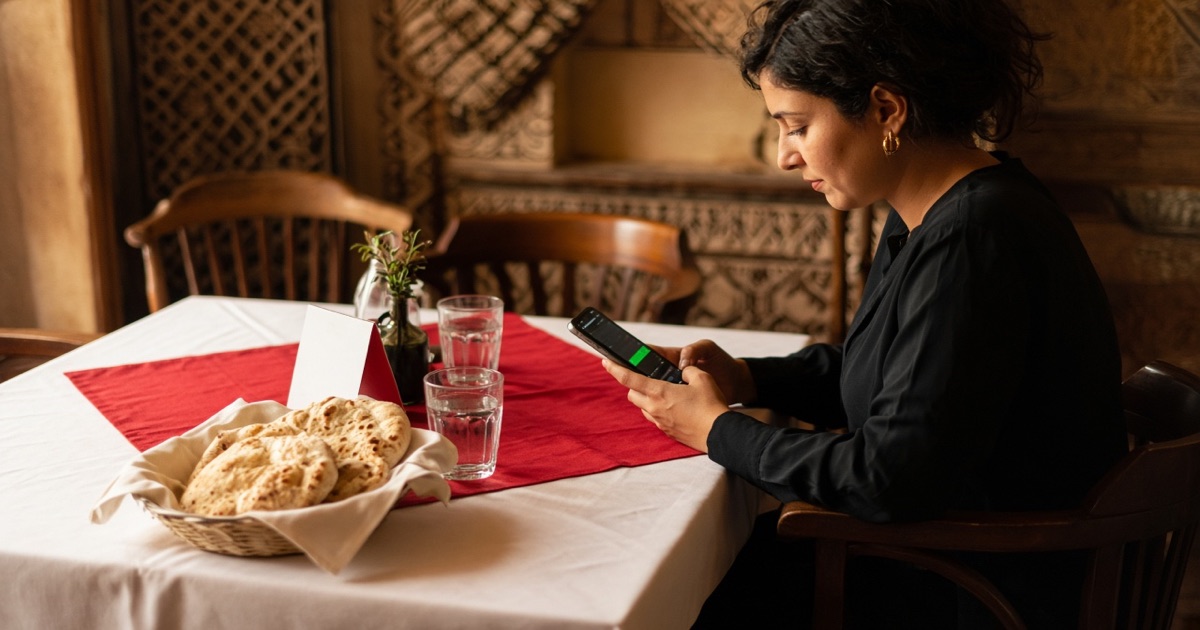
Cover and service fees: show them early, so they are not a surprise
Bread and water are not free if they land on the total with no line. Clarity prevents a fight more than a discount does.
A cover fee is not a sin. The sin is the guest seeing it first under the total. Then the bread they ate reads as a trick, even when the amount is fair and normal for the room.
A line that appears early turns the fee from a surprise into a rule. Same as delivery: people accept what they see before confirm.
1. Use a name people understand
“Covers” in English on an Arabic bill adds suspicion. “Service,” “cover,” or “bread and water” — the local word is calmer.
Better: one stable word in the basket and on the ticket. Do not change it between locations without a reason.
2. It appears with the first item
A fee that is calculated when they add a dish should show at once. If it waits until the end, it feels padded.
Better: the basket shows items + cover + tax if any. The total updates while they are still choosing.
3. Split dine-in from takeaway
A cover on a standing bag is a fight you deserve. The fee is for a seated table, not every channel.
Better: cover on table orders. Takeaway and delivery without it, unless you have a written reason.
4. A fixed amount, or a clear rule
“Per person” without asking how many is a guess. Guests type two while they are four, or the reverse.
Better: either a flat amount per order, or ask party size before confirm. Fog costs more than the fee.
5. Do not bribe the fee away at random
A waiter waives cover because someone got upset, and the exception becomes the rule. Other tables hear.
Better: if you waive, write a policy (certain guests, an offer). The cashier does not negotiate every bill.
A one-week test
Turn the line on. Count how many people ask “what is this?” If the question is frequent — the name is unclear, not the fee rejected.
menutables adds cover into the total on the server, and shows it in the basket. Start free and let the bill be known before confirm, not after.