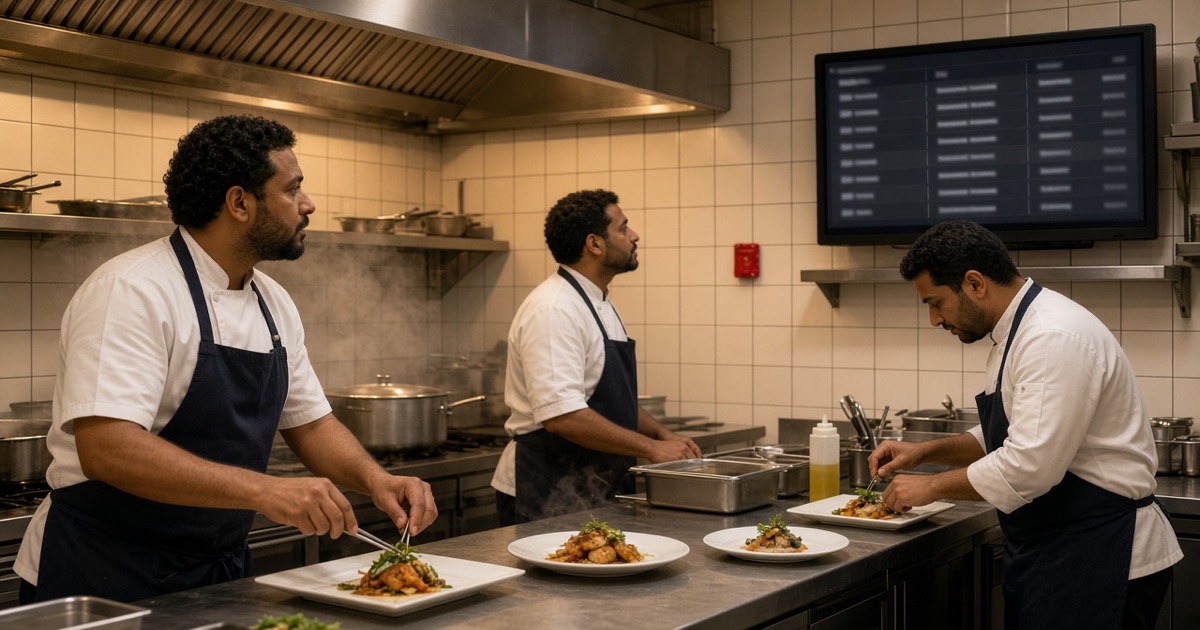
A kitchen screen instead of shouting: the ticket arrives without anyone running
Sound gets lost in a rush. A screen on the line does not walk to the wrong table.
The cashier shouts the order, the chef hears half, the waiter hears another half. In a rush, voice is the cheapest tool and the weakest network. A ticket on the line does not compete with the playlist or with table 12.
A screen is not hotel luxury. It is how mistakes drop when volume rises.
1. Write the ticket once
Paper from cashier to kitchen gets wet, or folded into a pocket. Rewriting is a ready-made error.
Better: the guest confirms, the ticket appears in the kitchen with the same items and extras. No re-dictation.
2. Status is not a shout
“Ready” and “not yet” by voice: half the floor hears, half the kitchen does not. Guests feel chaos even when the food is fine.
Better: status on the screen: new, preparing, ready. Waiters look. They do not ask every minute.
3. The screen sits by the hands
A screen in the manager’s office is not a kitchen screen. Cooks will not leave the fire to open a laptop.
Better: a fixed screen on the line, readable from two metres. Lighting that still works with steam.
4. Waiter and cashier without a fight
Who confirms? If both confirm the same ticket, the kitchen cooks two.
Better: clear rules for who moves status. The screen will not block errors if everyone has every permission and no teaching.
5. Guests can watch sometimes
A customer screen on takeaway cuts “is ours ready?” every minute. Not required everywhere. Useful when the queue is long.
Better: try it on takeaway first. The floor usually needs the table number on the ticket more.
A service test
One night with no shouted names. Screen only. Count how many plates came back or went to the wrong table. If that dropped — voice was the weak network, not the team.
Premium on menutables includes a kitchen screen and a customer screen. Start free and, when volume grows, let the ticket be quieter than a shout.