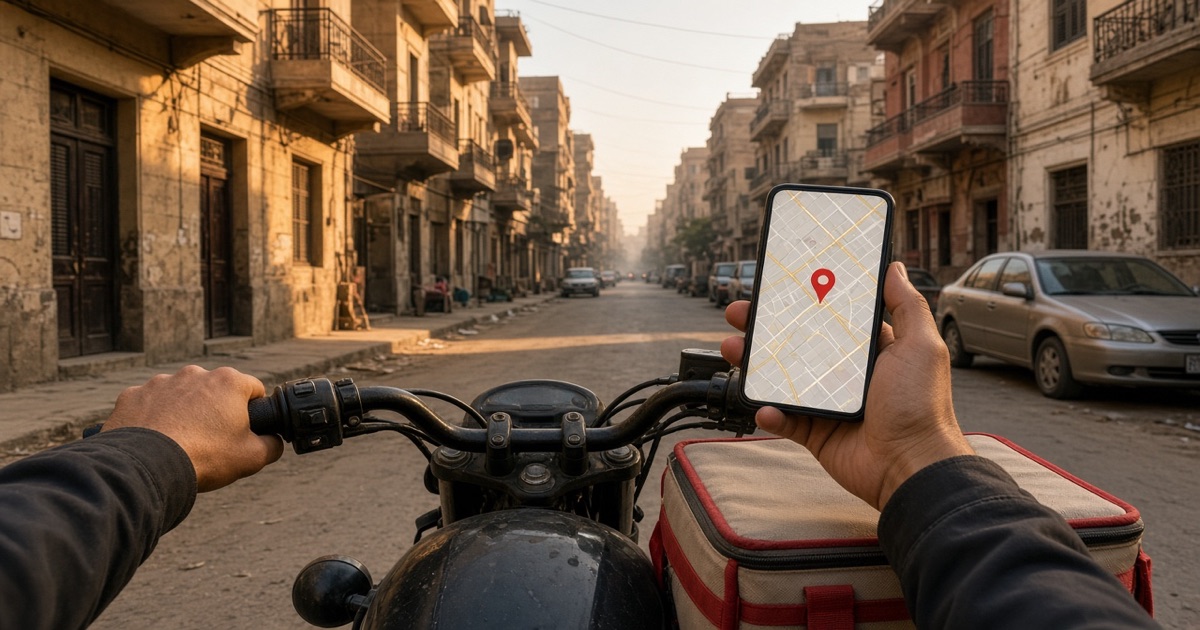
Your own delivery: minimums, fees, and one-tap directions
No aggregator: when delivery makes money, when it swallows the order, and how the driver leaves without a second phone call.
Own delivery means the margin comes back to you — and the complaints too. Plenty of shops price by gut: “20 EGP anywhere.” A month later the driver spends more on fuel than the fee, or guests cancel because the minimum is high.
The setup is not a hard formula. It is three numbers, and an address that opens without anyone pasting it into WhatsApp.
1. A minimum protects the empty trip
A 45 EGP order across the neighbourhood, with a 15 EGP fee, loses money after packaging and time. A minimum is not greed. It is a filter.
Better: a minimum that covers an average trip. If they are under it, they add an item or pick up. Do not hide the number in tiny footer text.
2. The fee must show before confirm
A fee that appears at the end feels like a trick, even when it is fair. People finish the order when they see the total early.
Better: the fee sits in the basket with the items. If you have zones, vary the fee by distance — but write it. Not “we will tell you later.”
3. An address without a second call
The driver gets a screenshot from chat and gets lost in the building. Every minute on the pavement cools the food.
Better: every delivery order carries the address, and one tap opens directions. The driver goes. The cashier stops dictating numbers.
4. Your zones are clearer than “all of Cairo”
That line pulls far orders you dodge at midnight. The guest is annoyed. So are you.
Better: name the areas you cover in the quiet and at peak. If you stretch on Friday night, that is a decision — not a surprise for the driver.
5. Measure the trip, not the bag count
Ten orders on the same street beat ten scattered ones. If the report only counts tickets, you will think you are winning while you loop.
Better: ask for a week: which area repeats? Cover it harder. The area that eats time gets a higher minimum, or gets closed.
A one-week test
Put the minimum and fee on the catalog, and try opening directions from the order. Ask the driver on Friday night: how many minutes went to finding the building? If the number is high — the address is not arriving, the driver is not slow.
On menutables you set delivery, minimum, and fees, and each order opens the map in one tap. Start free and make delivery a sales channel, not a service you lose on fuel.