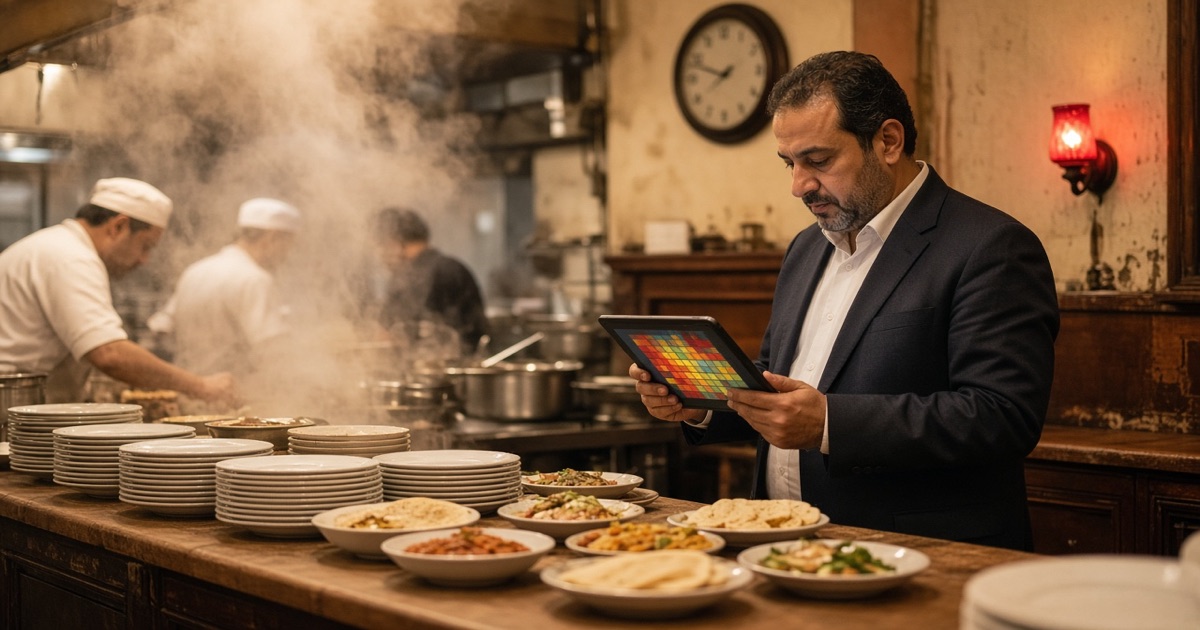
Peak hours: how to set shifts from the orders report
Guesswork puts extra people in the quiet and too few in the rush. The numbers are calmer than the feeling.
Most kitchens write the shift by feel: “Friday is busy,” “lunch is dead.” Feel is sometimes right, and often wrong in the detail. Detail is what costs: a chef standing from 4 p.m. while tickets start at 7.
A peak-hours report is not a pretty chart. It is a staffing table. Here is how to read it without becoming an analyst.
1. Look at the hour, not only the day
“Saturday is busy” is an incomplete sentence. Busy at what time? If the peak is 7 to 10, a full team from 2 p.m. is payroll on a quiet room.
Better: ask the report: which two hours have the most orders each day? That is the core of the shift. Everything else covers.
2. Split the floor from delivery
Dine-in pressure is not delivery pressure. Tables full at 2 p.m., bikes at 9. Staff both the same and you punish one of them.
Better: if the report splits order mode — at the table, takeaway, delivery — put waiters on floor hours and drivers on delivery hours.
3. The kitchen lags the cashier
A ticket confirms in a minute and cooks in fifteen. If the peak hits with too few cooks, the cashier will collect a pile.
Better: an extra cook 30 minutes before the peak, not after the queue appears. The report tells you when volume jumps, not when a guest shouts.
4. Quiet is not time off
Empty hours are prep time, not vanish time. Chopping, packing, checking what ran out.
Better: give the quiet shift visible work: prep, a quick count, updating availability on the catalog. An idle quiet hour looks like laziness. It is actually slack you can use.
5. Change after two weeks, not every day
Rain or a football match will break the shape. Do not rewrite the shift on one spike.
Better: look at fourteen days. If Thursday night is stable, lock people in. If Sunday swings week to week, stay flexible only there.
Next week’s test
Take the last 14 days. Mark the two peak hours. Move one person from the quiet block into the peak. After a week ask the kitchen: did the pile shrink? One move is clearer than rewriting the whole rota.
menutables has a peak-hours report by hour and day. Start free and, once orders come in, the rota can follow what happened — not what you remember.