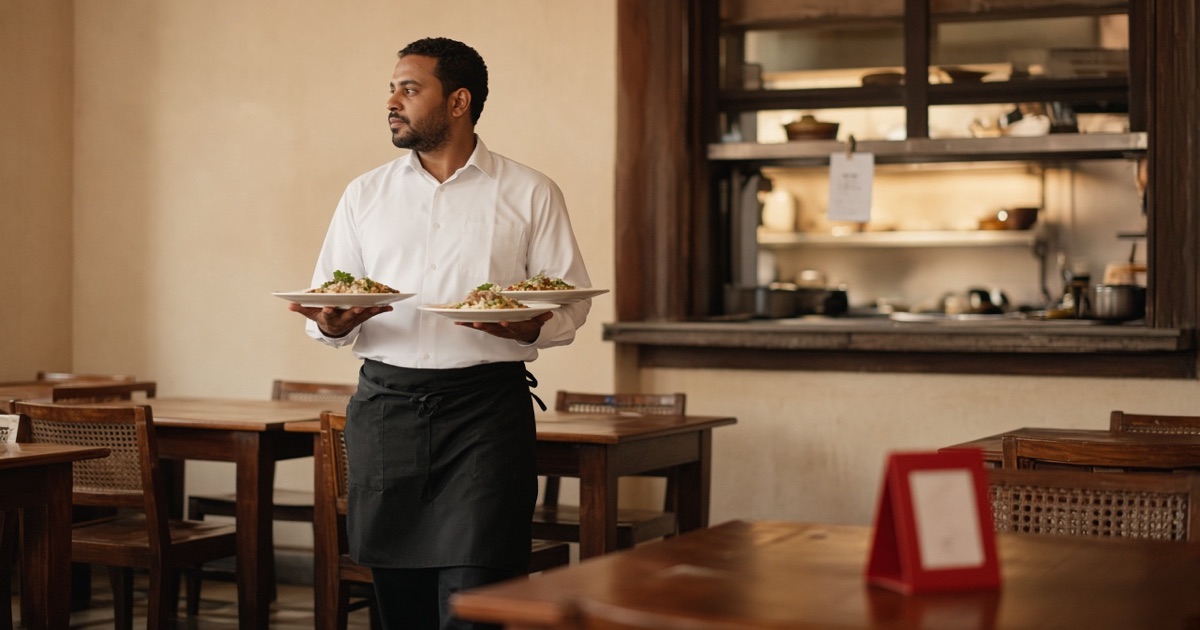
Table number on the ticket: so food does not get lost between floor and kitchen
The order confirmed, the plate is done, then “which table?” That minute cools the food and scrambles the team.
Phone ordering is fine until the kitchen finishes a plate with no address. The floor shouts, the waiter loops, the guest thinks they were forgotten. Usually nobody forgot. The number was just missing on the ticket.
A table number is not bureaucracy. It is an indoor address, like the delivery address outside.
1. The number on the stand, not in the waiter’s head
If guests cannot see a number while they scan, they will type 4 while sitting at 7, or leave it blank.
Better: a large number on the QR stand. Same face as the scan line. Do not hide it under the shakers.
2. Ask before confirm
Letting a dine-in order through without a number “so we do not block the guest” means you block the kitchen later.
Better: table orders ask for a table number. Takeaway does not. Delivery asks for an address. Each channel gets its field.
3. The ticket keeps the same number
The cashier retypes it, and mistypes. It happens. A plate goes to 12 and the guest is at 21.
Better: the number arrives from the guest’s order onto the cashier board and the kitchen screen. Retype only if you must.
4. People move tables
Guests switch seats. If nobody can edit, food walks to the old place.
Better: the team can change the number before the plate leaves. After it is served, lock edits — cleaner than chaos.
5. Calling a name is not a floor system
“Ahmed’s order” in a busy cafe hits three Ahmeds. A number is calmer.
Better: names for delivery and takeaway. On the floor: table number first.
A one-night test
Check ten dine-in tickets. How many have no number, or an impossible one? If more than one — the stand is unclear, the guest is not merely in a hurry.
Menu orders on menutables can carry a table number onto the board. Start free and make the floor address clearer than the shouting.